Tag: crypto

  • XRP Fell Nearly 70% — Could History Repeat With An 835% Surge?

    XRP Fell Nearly 70% — Could History Repeat With An 835% Surge?

    A sharp drop in XRP has rattled short-term holders, but some onlookers warn the sell-off may be setting a base for a much larger rebound. Reports say the token slid hard after peaking last year, and a mix of on-chain metrics and chart patterns has traders weighing whether this is panic or opportunity.

    Deep Losses And A Familiar Pattern

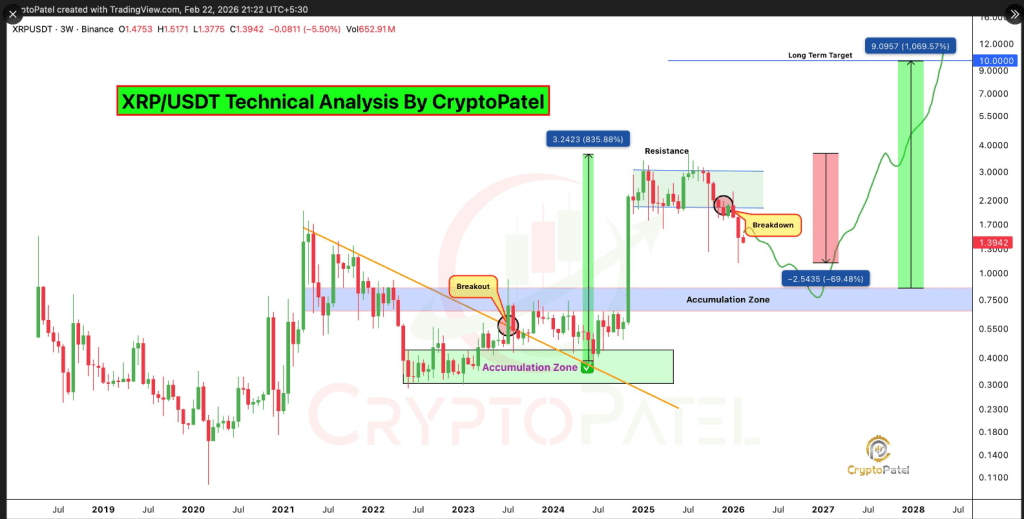
    According to price data, XRP fell from a high near $3.65 to roughly $1.38, a move that wiped out a large chunk of recent gains and produced a 60% pullback from the July peak.

    Traders watched as realized losses spiked, with roughly $1.90 billion recorded over one week — a level that matches past capitulation events.

    When big losses pile up in a short span, selling pressure can be exhausted and the market is often left with fewer weak hands.

    Reports note that the token is approaching a higher-time-frame demand area between $0.85 and $0.65, a zone that acted as resistance before the rally in late 2024.

    In prior cycles, that same area turned into a multi-year accumulation range where long-term buyers stepped in.

    From Panic To Jubilation

    Analyst Crypto Patel has highlighted those historical signals on social feeds, arguing the setup looks familiar and may not be permanent panic.

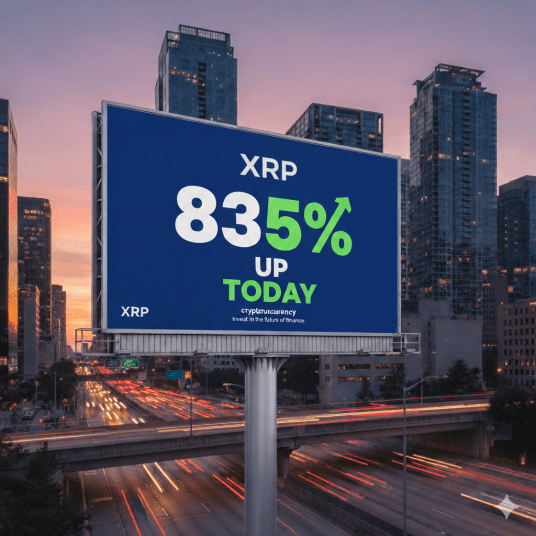
    He warned that XRP has dropped 69% and panic is spreading, but the last time it fell this much, it surged 835%.

    Bitcoin Moves Provide Context

    Across the broader market, Bitcoin’s swings have been a backdrop to altcoin pain. Recent sessions saw BTC shift from the high $66,000s down toward the mid-$60,000s, and that kind of volatility tends to drag other coins along.

    When BTC retreats, altcoins often fall harder, and XRP was no exception. The interplay between Bitcoin’s price action and altcoin flows is a practical reminder that macro moves still matter even when token-specific stories dominate headlines.

    Reports have recorded quick selling from short-term holders after price broke below $2, a psychological level many treated as support. That drop accelerated the move to near $1.11 in early February, which represented close to 70% drawdown from the cycle top.

    What Traders Are Watching Next

    A slice of the market exited positions in frustration. Those exits show up cleanly on-chain as realized losses, which can mark the final wave of sellers before stability returns.

    From a technical view, staying above the lower bound of the $0.65 to $0.85 band on longer timeframes would be taken as constructive by many.

    If that holds, a phased recovery could bring prior resistance levels back into play — around $2, then $3, and beyond.

    Featured image from Gemini, chart from TradingView

  • History Repeating? XRP Flashes Signal Last Seen Before Explosive 60,000% Rally

    History Repeating? XRP Flashes Signal Last Seen Before Explosive 60,000% Rally

    XRP is on track to close its fifth consecutive month in negative territory, a rare stretch of sustained losses that has not been seen since late 2016. Despite holding at around $1.30, the token has declined nearly 30% in February alone, according to CoinGecko data, extending a broader five-month decline of roughly 50%.

    XRP Flashes Pre-Bull Run Pattern

    The last time XRP recorded five straight red monthly candles was between October 2016 and February 2017. During that period, the price slipped from $0.00885 to $0.00557, a decline of 37%, before finding a bottom near $0.0055 in March 2017. By May 2017, XRP had surged to $0.3988 — a gain of 7,000% in just two months. 

    After consolidating through the summer, the token climbed again, eventually reaching $3.31 in January 2018. From its March 2017 low, that marked a 60,000% increase.

    With XRP now following a similar path, market analyst Sam Daodu examined the comparison in a new report released on Monday.

    Daodu noted that the current setup “rhymes” with the 2016–2017 structure: five consecutive months of declines, tightening price action, and signs that selling pressure may be exhausting itself. However, he cautioned that the market environment has changed dramatically since XRP was “a micro‑cap token.

    In 2017, XRP’s total market value was less than $300 million. Daodu pointed out that at that level, even a few hundred million dollars in new capital might raise the price by thousands of percentage points. 

    Today, XRP has a market capitalization of about $88 billion. According to the analyst, this scale makes a 60,000% surge virtually impossible under any realistic market conditions.

    250% Rally Still In Play

    A comparable rally would imply a move to roughly $852 per token. With approximately 58 billion XRP in circulation, that would translate to a market capitalization exceeding $49 trillion — more than the combined value of all stocks listed on the New York Stock Exchange. 

    Still, Daodu argues that while a repeat of the 2017 explosion is off the table, a meaningful recovery remains within reach if the bottoming pattern holds. 

    A return to XRP’s July 2025 high of $3.65 would represent a gain of about 157% from current levels. A move toward $5 — near the upper range of analyst forecasts for 2026 — would amount to a 252% increase.

    Even more conservative projections suggest room for upside. Standard Chartered recently reduced its XRP target by 65%, citing near‑term headwinds, but its revised forecast of $2.80 would still imply a roughly 97% rise from current trading prices.

    XRP

    The key difference in this cycle, according to Daodu, lies in the source of demand. The explosive rally of 2017 was largely driven by retail speculation. 

    In contrast, any substantial gains this time would likely depend on institutional flows, including potential exchange‑traded fund (ETF) inflows, broader institutional adoption, and a recovery across the wider crypto market.

    While another 60,000% run is unrealistic, Daodu believes a 150% to 250% advance is achievable if momentum shifts and capital returns to the sector.

    Featured image from OpenArt, chart from TradingView.com 

  • Bithumb $43 Billion Bitcoin Blunder Triggers Political Backlash In South Korea

    Bithumb $43 Billion Bitcoin Blunder Triggers Political Backlash In South Korea

    South Korean lawmakers are ramping up pressure on financial regulators after a system failure at Bithumb, the country’s largest cryptocurrency exchange, led to the accidental distribution of more than $43 billion worth of Bitcoin (BTC) earlier this month.

    The February 6 incident has triggered political scrutiny of both the exchange itself and the agencies responsible for overseeing the virtual asset market. 

    Behind The Bithumb Massive Bitcoin Mishap

    According to local reporting by The Korea Times, members of the National Assembly are questioning how such a massive error could slip through despite repeated regulatory inspections.

    Rep. Kang Min-guk of the main opposition People Power Party disclosed that the country’s Financial Services Commission (FSC) reviewed Bithumb three times between 2022 and 2025. 

    Over the same period, the Financial Supervisory Service (FSS) conducted three separate inspections. Yet regulators failed to detect what has now been described as a critical structural weakness in the exchange’s system.

    Kang argued that existing oversight mechanisms were inadequate. He pointed out that safeguards were insufficient to prevent a situation in which a single employee could initiate massive coin transfers. Kang said:

    The episode is not merely a technical mishap but a case that lays bare deeper structural weaknesses in the virtual asset market, including complacent supervision and gaps in regulation.

    Instead of crediting users with Bitcoin worth 2,000 won — approximately $1.38 — the system mistakenly credited 2,000 Bitcoin per user. In total, 620,000 Bitcoin were incorrectly distributed. 

    Rep. Han Chang-min of the minor Social Democratic Party also criticized regulators, questioning whether supervisory authorities had meaningfully evaluated the exchange’s internal systems. “Authorities appeared to be shifting responsibility onto Bithumb despite their supervisory role,” Han said.

    Broader Crypto Oversight 

    In response to the incident, the FSS extended the deadline for its formal investigation from Feb. 13 to the end of the month, citing the need for additional time. 

    An eight-member inspection team is now intensifying its review, focusing on possible violations related to investor protection and anti-money laundering (AML) compliance. 

    Particular attention is being given to the system architecture that allowed coins not actually held by the exchange to be credited to users. Regulators have not ruled out the possibility that further erroneous distributions could be uncovered.

    Separately, financial authorities have reportedly formed an emergency response team in coordination with the Digital Asset eXchange Alliance (DAXA), a self-regulatory body representing domestic exchanges. 

    The team has begun inspections of asset verification and internal control systems at four other platforms — Upbit, Coinone, Korbit, and GOPAX. Any deficiencies are expected to be incorporated into DAXA’s self-regulatory guidelines and could influence the next phase of cryptocurrency legislation in South Korea.

    Bithumb

    At the time of writing, Bitcoin was trading at $67,763, marking a 2% decline over the past seven days and showing minimal change since Thursday’s trading session. 

    Featured image from OpenArt, chart from TradingView.com 

  • XRP Tipped As Central Bank Bridge Asset — Bigger Than Bitcoin?

    A seasoned investor’s bold claim about XRP has reignited a common question in crypto markets: could a token built for fast settlement ever outgrow the original store-of-value?

    According to posts on X by longtime Bitcoin backer Pumpius, if central banks adopt a single on-chain bridge, XRP could eclipse Bitcoin “by magnitude.”

    On-Chain Tension And Policy Moves

    Reports note recent market moves that have worried policy makers and traders. The trading desk at the Federal Reserve requested indicative dollar/yen quotes after a sharp move in the yen, a step that Treasury officials had asked for.

    That rare check underlines how currency volatility can push officials to consider new tools, and it has renewed talk about faster settlement rails.

    Ripple’s Timeline And Institutional Talk

    Based on reports from company briefings and executive posts, Ripple’s leadership sees 2026 as the year when larger, regulated players might put real money onto the XRP Ledger.

    Ripple President Monica Long has sketched out scenarios where banks and asset managers run production systems tied to on-chain liquidity pools. Those views have been picked up across crypto news outlets and have added fuel to bullish narratives.

    How Would A Bridge Asset Work?

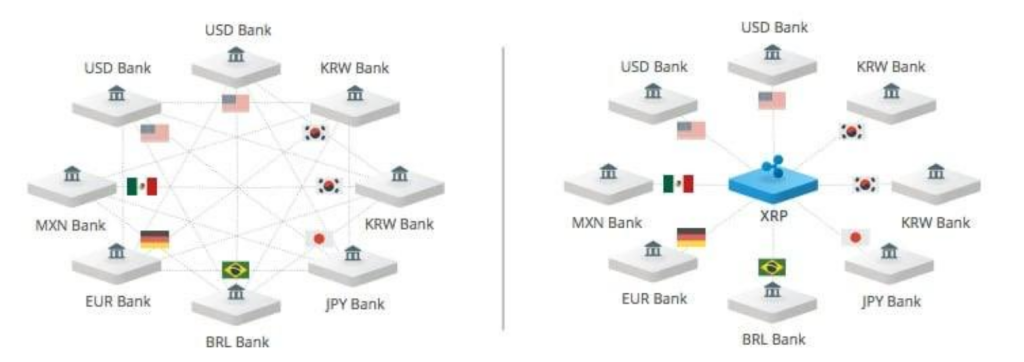
    Imagine dollar and euro liquidity on a ledger, available for near-instant swaps. In practice, permissioned pools and regulated stablecoins could provide the rails while an on-chain order book or matching engine handles the trades.

    Settlement times would be measured in seconds. Audit trails would be automatic. That said, large institutions put a premium on rules and oversight; any real rollout would be gradual and cautious.


    XRP Vs. BTC: The Size Of The Gap

    Numbers matter. Bitcoin’s market cap sits comfortably in the trillions, while XRP’s market value is under $100 billion dollars, depending on which tracker you consult.

    That gap is not small. For XRP to “flip” Bitcoin at present values would require trillions more in capital moving into the token — a shift that would likely need broad institutional flows and major regulatory clarity.

    Geopolitics Adds Noise

    Geopolitical strain and trade frictions, amplified by speeches or decisions from leaders, can make markets jittery. US President Donald Trump has been named in debates over policy shifts and geopolitical risk, which in turn affect capital flows and safe-haven bids.

    When politics moves markets, technical fixes such as faster settlement can look more attractive on paper; adoption in practice is another matter.

    Featured image from Unsplash, chart from TradingView

  • Saylor Makes Bold $1M Bitcoin Call — “It’s Zero Or A Million”

    Saylor Makes Bold $1M Bitcoin Call — “It’s Zero Or A Million”

    Markets are quiet and uneasy. Bitcoin prices have pulled back, and big holders are keeping a cool face while the charts wobble. Reports note that one outspoken investor frames the market in stark terms: it either fails completely or becomes far more valuable than people now imagine.

    Saylor’s Binary Bet

    According to Michael Saylor, Bitcoin has only two plausible final outcomes: worthless, or worth $1 million per coin. That is not a quick trading idea. It’s a long-running view about scarcity and demand.

    Saylor argues that a fixed supply paired with growing institutional buying and broader custody tools makes a future of massive price gains possible. He points to more banks, more spot ETFs and bigger corporate allocations as proof that demand has matured.

    A Warning From The Other Side

    Reports note that not everyone agrees. Mike McGlone of Bloomberg has sketched a darker path, one where price pressure and macro shocks could push values much lower — even toward $10,000.

    That view is rooted in history: markets can fall a long way before confidence returns. Short-term moves can be savage. Longer swings can be slower to recover. Both views are true on their own terms, because they answer different questions about time and risk.


    Balance Sheet And Funding

    Based on reports, the firm backing Saylor’s posture holds a very large stake: 717,131 BTC bought at an average cost of $76,027 a coin. That position is underwater for now. Still, financing choices matter. Strategy relies on equity, convertible notes, and preferred shares to meet cash needs.

    Arkham Intelligence has mapped out that preferred dividends are optional and redemptions are not automatic, which lowers the chance of forced sales right away. That setup buys time, though it does not erase exposure if prices stay low for a long stretch.

    Supply, Demand And The Big Numbers

    Saylor’s $1 million projection is driven by a supply argument: there are only 21 million coins. If enough institutions and treasuries keep buying, the math pushes the price up.

    He has said that with a particular share of total coins held by his firm, values could move into the millions, and he has sketched an even higher, $10 million possibility under stronger concentration scenarios.

    Those are not forecasts you can treat like short-term targets. They are conditional models — possible only if adoption, regulation and market behavior all line up for years.

    The path forward is not easy. Bitcoin could crawl higher, stumble and trade in narrow ranges for years, or shoot up as new buyers enter. Politics, regulation and global liquidity will shape which route unfolds. Institutional entry has changed the market structure, but it has not removed the risk of big drawdowns.

    Featured image from Pixabay, chart from TradingView